Stanislav Lisovskiy
Selling a Dental Practice: What to Fix in the Business First
ReadSelling a dental practice is easier when the practice can run without your own chair time. Start getting it ready three to five years ahead.

Stanislav LisovskiyReviewed
A business exit strategy is your plan for how you will leave the business, and when. You pick the way out years ahead, so it does not pick you.
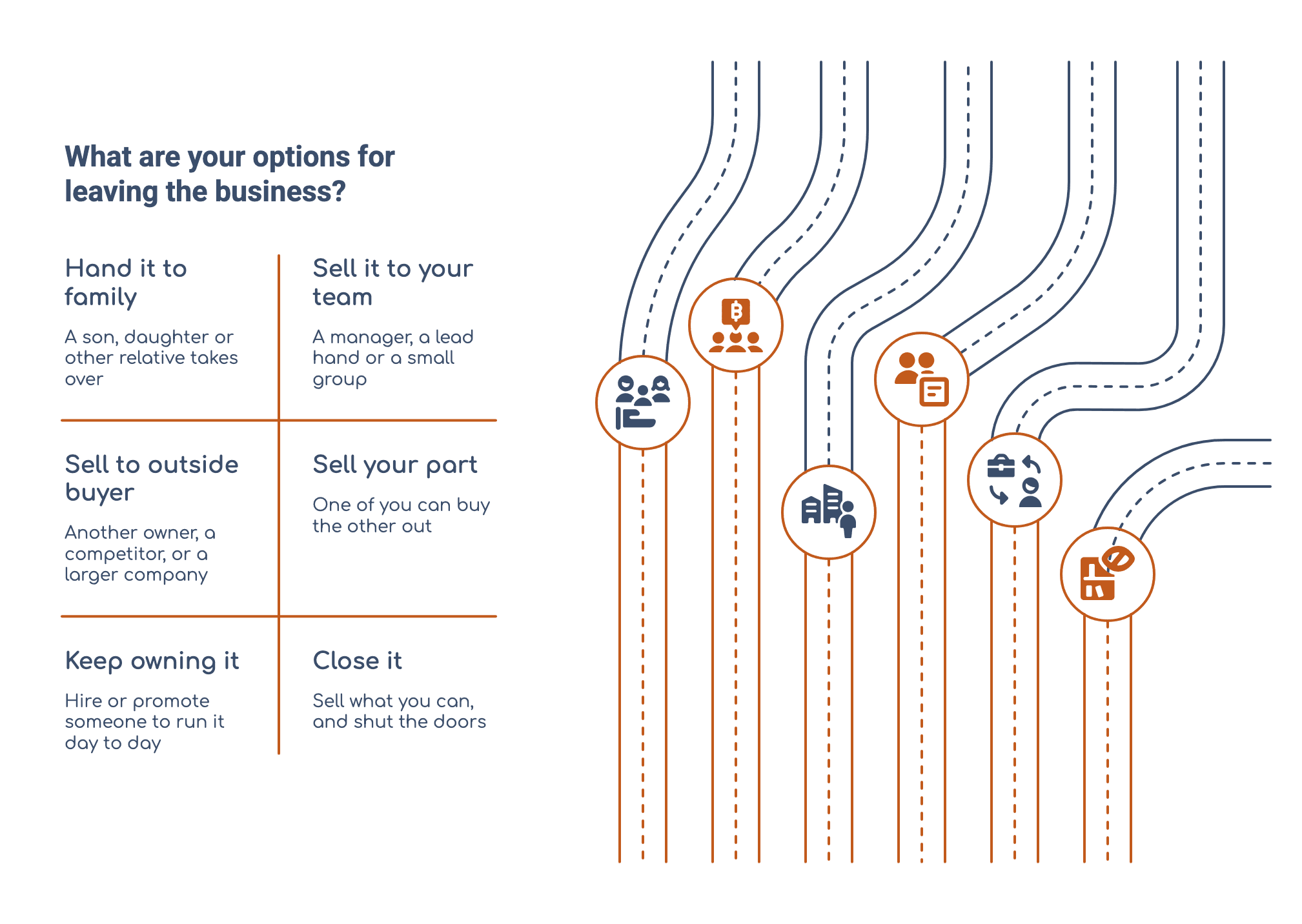
A business exit strategy is your plan for how you will leave your business. It says which way out you will take, when, and who runs the business after you. For most owners, the way out is one of six: hand it to family, sell it to your team, sell it to an outside buyer, sell your part to a partner, step back and hire someone to run it, or close it. A good plan picks one, and has a backup.
Every owner leaves their business one day. The only question is whether you choose how.
Many owners are closer to that day than they think. In a 2023 Exit Planning Institute survey, 49% of owners said they want out within five years. The same group guesses that about half of all exits are not planned. They come from death, disability, divorce, distress or disagreement, the "5 D's." In the survey, 41% of owners had no written plan for any of them.
There is a money reason too. EPI puts the average owner's business at about 80% of what they own. When that much rides on one thing, how you leave it matters.
1. Hand it to family. A son, daughter or other relative takes over. This works when they want it and can run it. Read our guide to family business succession planning.
2. Sell it to your team. A manager, a lead hand or a small group of your people buys you out, often over a few years. They already know the work and the customers. They may need time to pay.
3. Sell it to an outside buyer. Another owner, a competitor, or a larger company buys the business. A business broker usually runs this sale. Buyers look hard at how much the business leans on you.
4. Sell your part to a partner. If you own the business with someone, one of you can buy the other out. Your lawyer should put how that works in writing, long before anyone wants to leave.
5. Step back, but keep owning it. You hire or promote someone to run it day to day, and you keep the ownership. This only works if the business runs without you.
6. Close it. You finish the work you have, sell what you can, and shut the doors. Sometimes this is the right choice. But you may get less this way. A business that is still running is often worth more than its trucks and tools.
There is no single right answer. Start with four questions:
Your answers usually narrow it to one or two routes. Then pick a backup, because life does not always go to plan.
Three to five years before you want to leave, if you can. Some owners start ten years ahead.
The paperwork of a sale takes months. The business work takes years. A buyer, a family member or your team can only take over a business that runs without you. Getting there means handing off jobs, writing things down and building a second layer of people. None of that happens in a quarter.
An exit plan can be a few pages. It should answer:
Write it down. Read it once a year.
The same things make it easier to sell and easier to hand to family or your team. Anyone taking over wants to know the business will keep going after you leave. Four things tell them it will.
None of these happen fast. Each one is a project. That is why the plan starts years before the exit. If you want to know what a buyer looks at in more detail, read our guide on what your business is worth.
This is a made-up example. It is not a client.
Rob owns a roofing company with four crews. He is 57 and wants to be out by 62. His kids have other careers. His top crew lead, Ana, has been with him nine years.
Rob's plan has two routes. First choice: sell to Ana and his office manager over five years. Backup: sell to an outside buyer through a business broker. Either way, the same work comes first. Ana learns to bid and schedule. The office manager takes over billing and the bank. Rob writes down how the company prices jobs. By year three, the business can run without him. Now he has two good options, not one deadline.
Altus Financial is a business coaching firm in Northampton, MA. Planning your exit is part of Transfer. It is one of the four areas we work in.
In Discovery, we look at how much the business leans on you, who could take over, and what would have to change. Then we help you build the plan, and work through it with you, one piece at a time.
We don't write legal papers or do your accounting. Your lawyer and CPA do. We work alongside them.
Thinking about your way out? Book a Founders Call. It takes 20 to 30 minutes.
Questions
It is your plan for how you will leave your business, and when. It names the way out, such as selling to your team or an outside buyer, and who runs the business after you. A good plan also has a backup, and says what happens if you have to leave early.
There are six usual ways out. Hand it to family. Sell it to your team. Sell it to an outside buyer. Sell your part to a partner. Step back and hire someone to run it. Or close it. Which one fits depends on your timing, your people and what you need from it.
Three to five years before you want to leave, if you can. The sale itself takes months, but making the business run without you takes years. Starting early gives you more than one option instead of a deadline.
Then something else may decide for you. The Exit Planning Institute estimates about half of exits are not planned. They come from death, disability, divorce, distress or disagreement. Without a plan, a court, a bank or a rushed buyer may decide who runs your business.
For the ownership side, yes. A lawyer drafts the sale terms and any partner agreement. A CPA helps with the tax side. The rest of the plan is getting the business ready to run without you. You can start that part today.
Keep Reading
Stanislav Lisovskiy
Selling a dental practice is easier when the practice can run without your own chair time. Start getting it ready three to five years ahead.
Stanislav Lisovskiy
A small business is usually worth a multiple of what it earns for its owner. In mid-2026, sold businesses averaged 2.7 times that cash flow.
Stanislav Lisovskiy
Family business succession planning means picking who runs the business next. Then you get them ready, years ahead.
Talk to a consultant
Start with a short call. It takes 20 to 30 minutes, and we both work out if we can help.
Important information
The content on this website is for informational and educational purposes only. It is not intended as, and should not be relied upon as, legal, tax, accounting, or investment advice.
Individual circumstances vary. You should consult your own attorney and CPA before acting on any information presented here. Altus Financial does not draft legal documents, give legal advice, or render tax or accounting opinions.


